Worked example: 14 listings through the kit
Haskerly Home is a made-up seller of kitchen and cleaning goods. It resells two brands, Quillfen and Dorrowby, and has its own label. Every picture below is one of the kit’s files with this catalog typed in, rendered from the file itself. Select a picture to open it full size.
1. Paste the report and read the flags
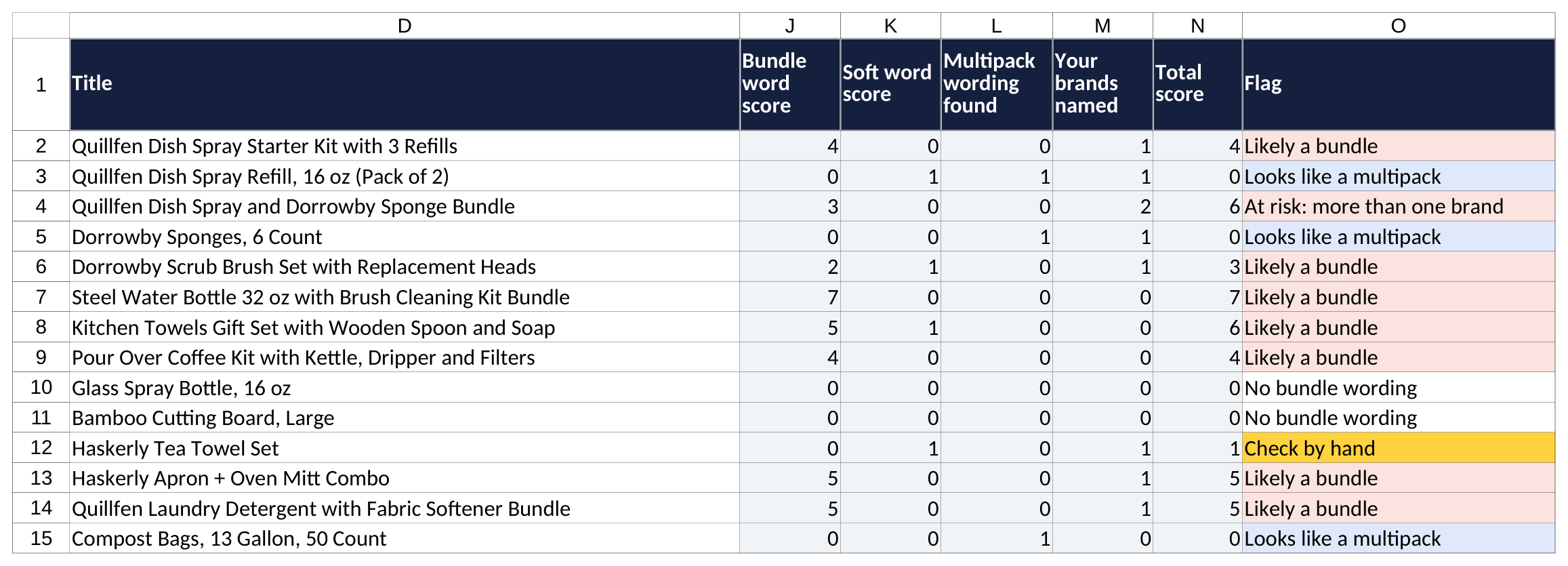
The seller pastes the All Listings report into the Import tab and types its three brands into Settings. The workbook scores each title.
Nine of the 14 titles are flagged. Three read as same-item multipacks and two have no bundle wording. Row 4 names both Quillfen and Dorrowby, so it is marked as more than one brand.
2. Answer four questions per flagged listing
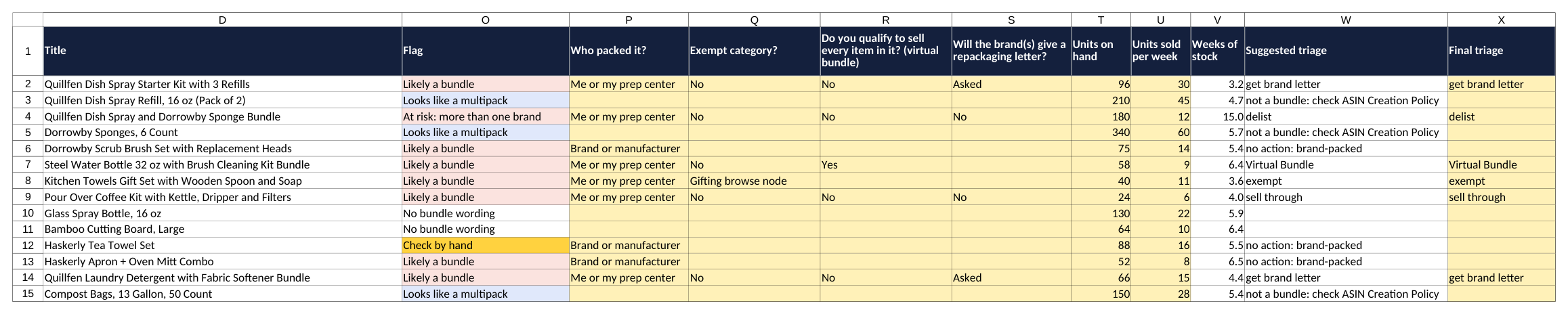
A title cannot show who packed the product, so the yellow columns ask. Three flagged listings turn out to be packed by the brand and need no action.
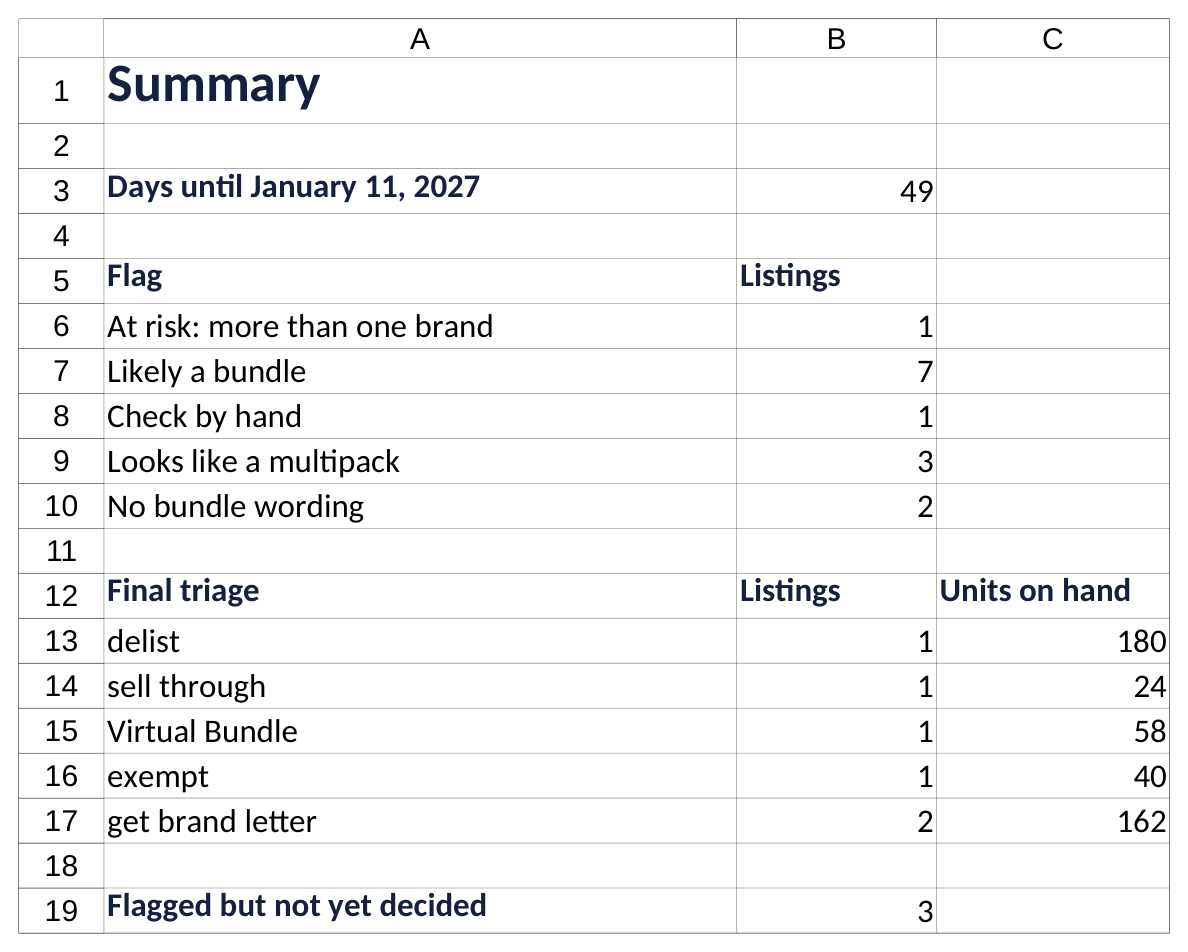
For the other six, the answers and the stock on hand lead to an outcome: two wait on a brand letter, one becomes a virtual bundle, one is exempt as a gift set, one sells through in four weeks, and the two-brand bundle is delisted because Dorrowby said no.
3. Ask Quillfen for a repackaging letter
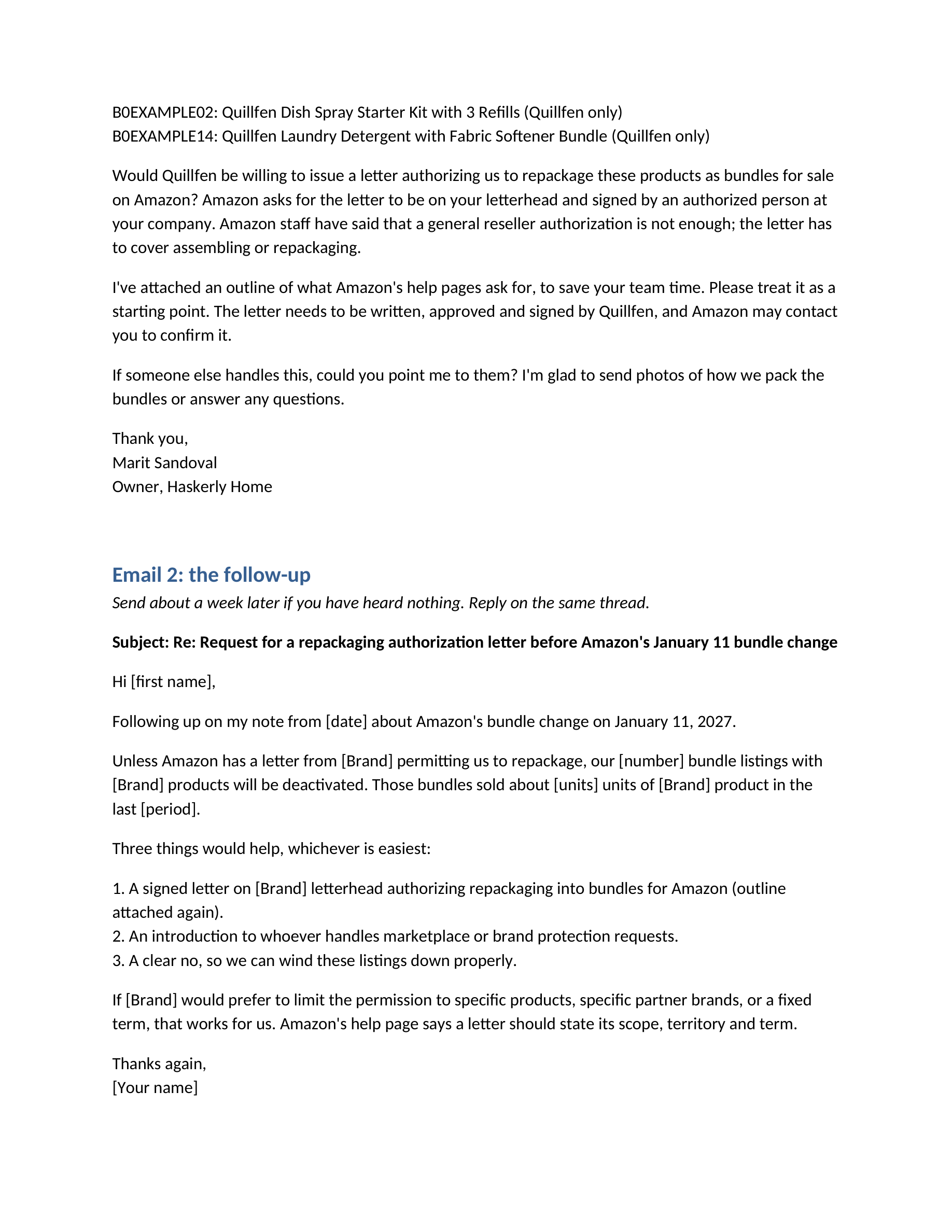
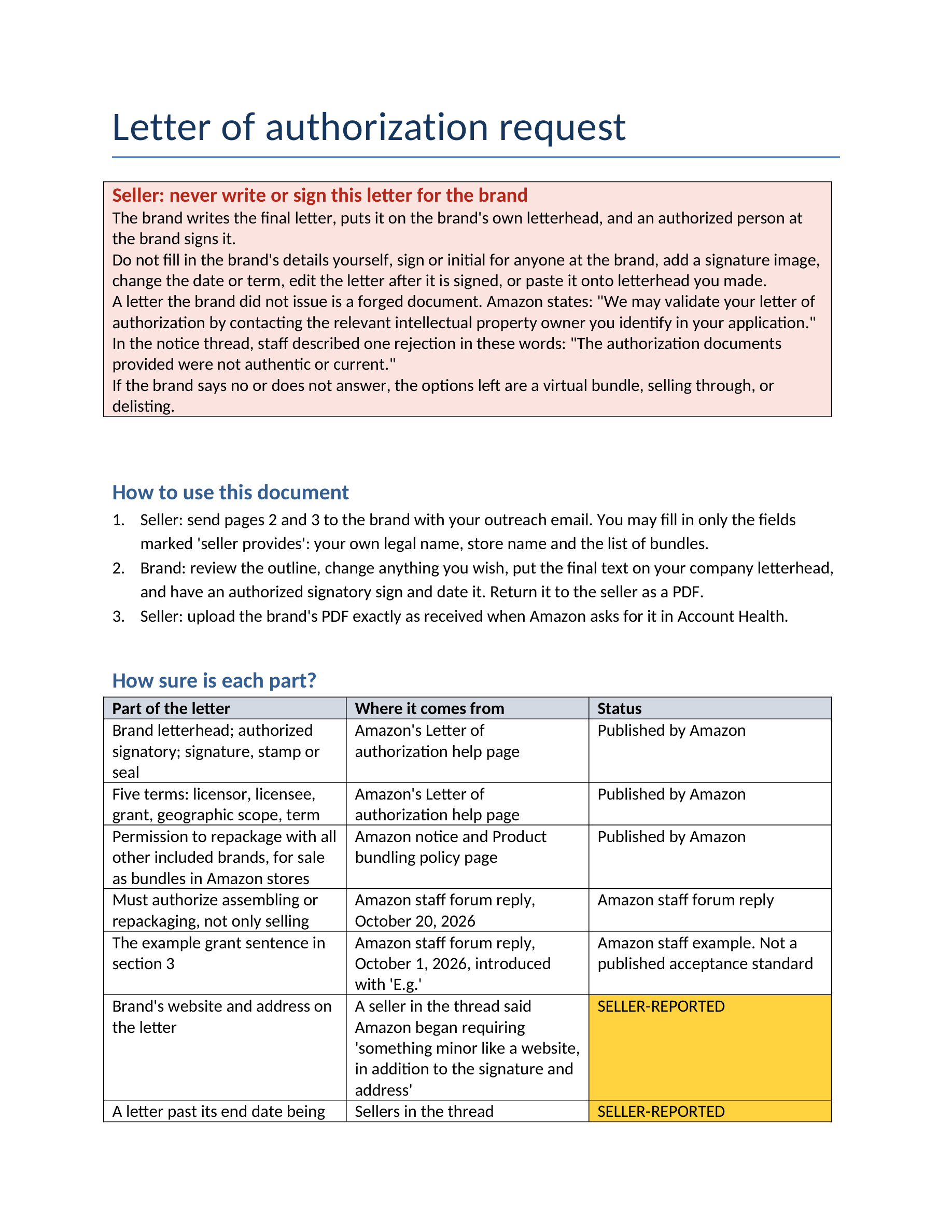
The first outreach email goes to Quillfen with both bundles listed. The letter request is attached for Quillfen to complete on its own letterhead.
Page one of the request opens with the warning that the seller must never write or sign the letter for the brand, and a table showing which parts Amazon has published and which are seller-reported.
4. Log the letter and each appeal
Cleaning products are consumables, where Amazon staff said seller-assembled bundles were already prohibited. In this example Amazon flags three listings in November.
Quillfen’s letter clears the first. The second is rejected and resubmitted, so it takes two rows. The rejection reason typed here is one that Amazon staff quoted in the notice thread. The Brands tab counts the results per brand.


5. Price the stock that has to leave
After six more weeks of sales, 108 units of the two-brand bundle remain. Each has a shipping weight of 1.4 lb, which Amazon bills as 2 lb.
Removal and disposal cost $2.27 a unit at Amazon’s published rates. Having the stock sent back costs $504.36 once the $2.40 lost on each unit is counted. Disposal costs $1,044.36, and liquidation $772.20 at the 60 cents a unit the seller guessed it would recover.

The five files
Checkout through Gumroad opens soon. The checker on this site is free and works now.
Haskerly Home, Quillfen, Dorrowby and the people named are invented for this example. Rates were read from Seller Central on November 23, 2026.